
Menopause
Is Not a Mood

The New Science of the Menopausal Brain and the Plan to Reclaim Your Mind and Your Power
The book begins with the physiology, then looks closely at the systems that determine how that physiology is interpreted.
It examines why the menopausal transition can alter cognition, emotional regulation, sleep, body composition, sexual function, and physical capacity without producing one clean clinical picture. It also addresses the assumptions that shape diagnosis, treatment conversations, and the credibility granted to women when their experience does not fit the expected presentation.
The central question is not whether each concern can be assigned to a separate category. It is what those concerns reveal when they are understood together.
The Argument
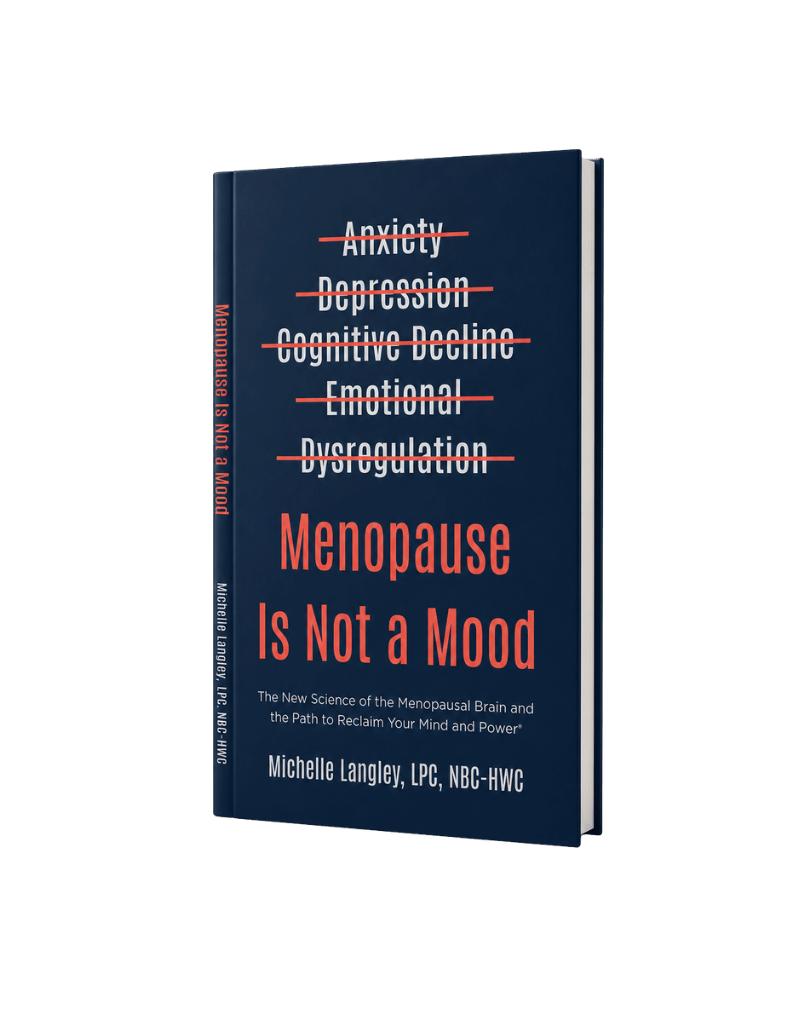
The Full Account
Menopause is still approached through isolated symptoms, separate specialties, and clinical thresholds that capture only part of what is happening. The woman living through the transition is expected to assemble those fragments into a coherent account of her own body.
Menopause Is Not a Mood examines what becomes visible when endocrine change, neurological function, metabolic regulation, sleep, inflammation, and androgen activity are considered within the same transition.
The MERIDA Framework™
Menopause Is Not a Mood introduces a structure for understanding the transition as a whole. It brings the physiology into one frame so the relationships between systems can be seen without reducing the experience to isolated symptoms or separate specialties.

Reclaiming the Narrative
The language used to describe menopause has been shaped by the clinical systems that evaluate it, and those systems have been incomplete. When the physiology is understood accurately, women stop absorbing explanations that were never built to account for what they are actually experiencing. They stop deferring, and begin to correct the record.